What Are Pierogi? A Guide to Poland's Most Loved Dumplings
Short answer: pierogi are Polish dumplings — soft dough folded around a filling such as potato and cheese, meat, spinach or sauerkraut and mushroom, then boiled and often pan-fried in butter. In Doha you can eat six kinds at Polka, Le Mirage City Walk, from QAR 40.
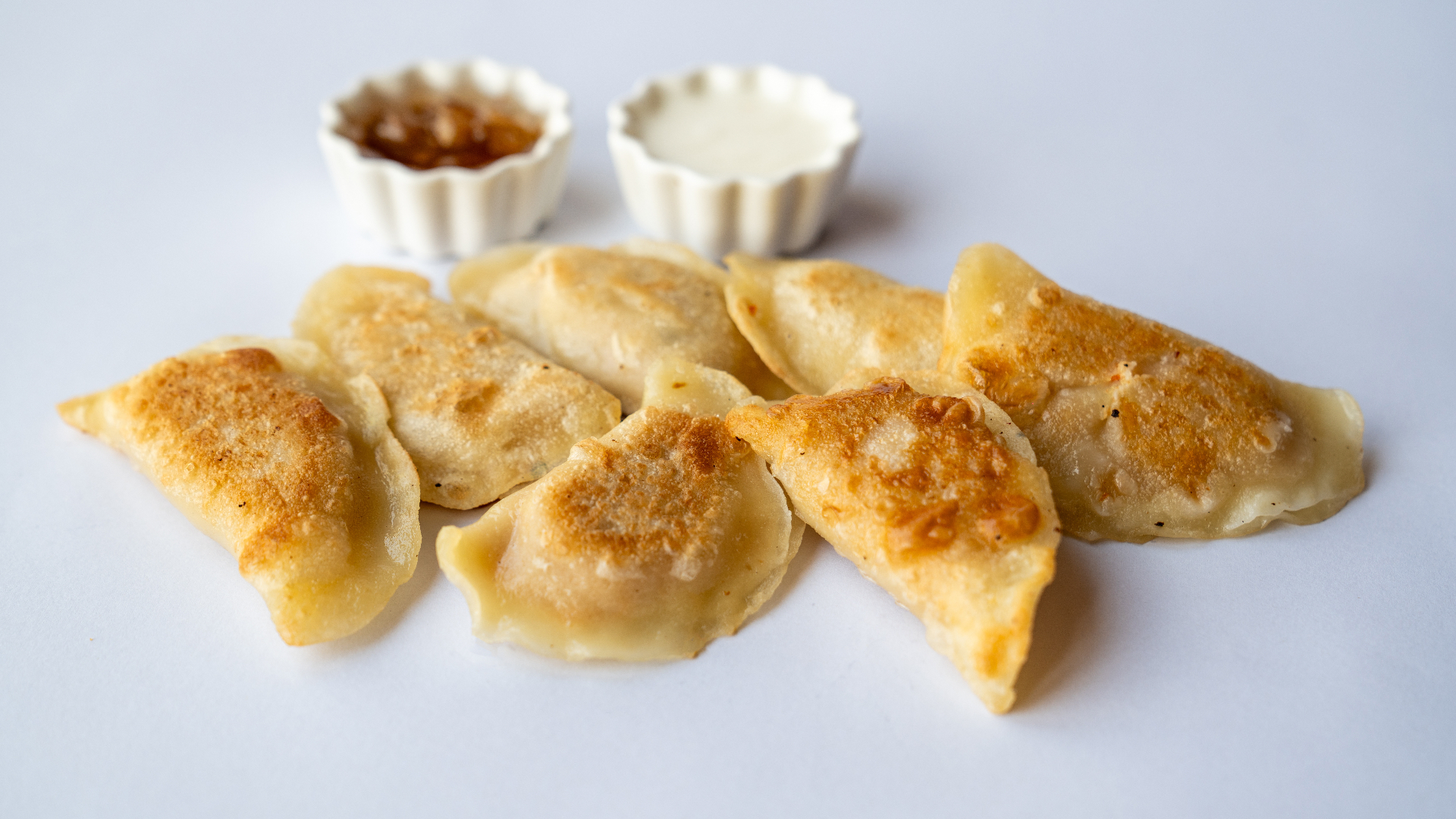
Pierogi (pronounced pyeh-ROH-ghee) are half-moon dumplings made from a simple unleavened dough, filled with savoury or sweet fillings, boiled, and very often finished in butter. The word is already plural in Polish — a single dumpling is a pieróg — so “pierogies” is a friendly English double plural.
A short history
Filled dumplings have been eaten across Central and Eastern Europe for centuries, and pierogi became a fixture of Polish home cooking as both an everyday dish and a celebration food. They appear at Christmas Eve supper, at weddings and at harvest tables, which is why almost every Polish family has its own dough recipe and its own preferred way of pinching the edges shut.
The classic fillings
- Pierogi ruskie — potato and soft twaróg cheese with onion. The best-known version and a great first taste.
- Meat — slow-cooked minced beef or veal, seasoned simply with onion and pepper.
- Cabbage and mushroom — sauerkraut with forest mushrooms, the traditional Christmas Eve filling.
- Spinach and cheese — a lighter, vegetarian favourite.
- Sweet fruit — blueberries, strawberries or plums, served with sour cream and a dusting of sugar.
How pierogi are cooked and served
Pierogi are first boiled in salted water until they float, then either served straight away or pan-fried until the edges turn golden. Savoury pierogi arrive with melted butter, caramelised onions and a spoon of sour cream; sweet ones are finished with cream and sugar or fruit sauce. They are usually eaten as a main course, though a small plate makes a lovely starter to share.
How to eat pierogi like a local
Order one savoury plate and one sweet plate for the table. Pair them with a bowl of żurek or barszcz to start, and don't skip the sour cream — the gentle acidity is what balances the buttery dough.
The pierogi we make at Polka
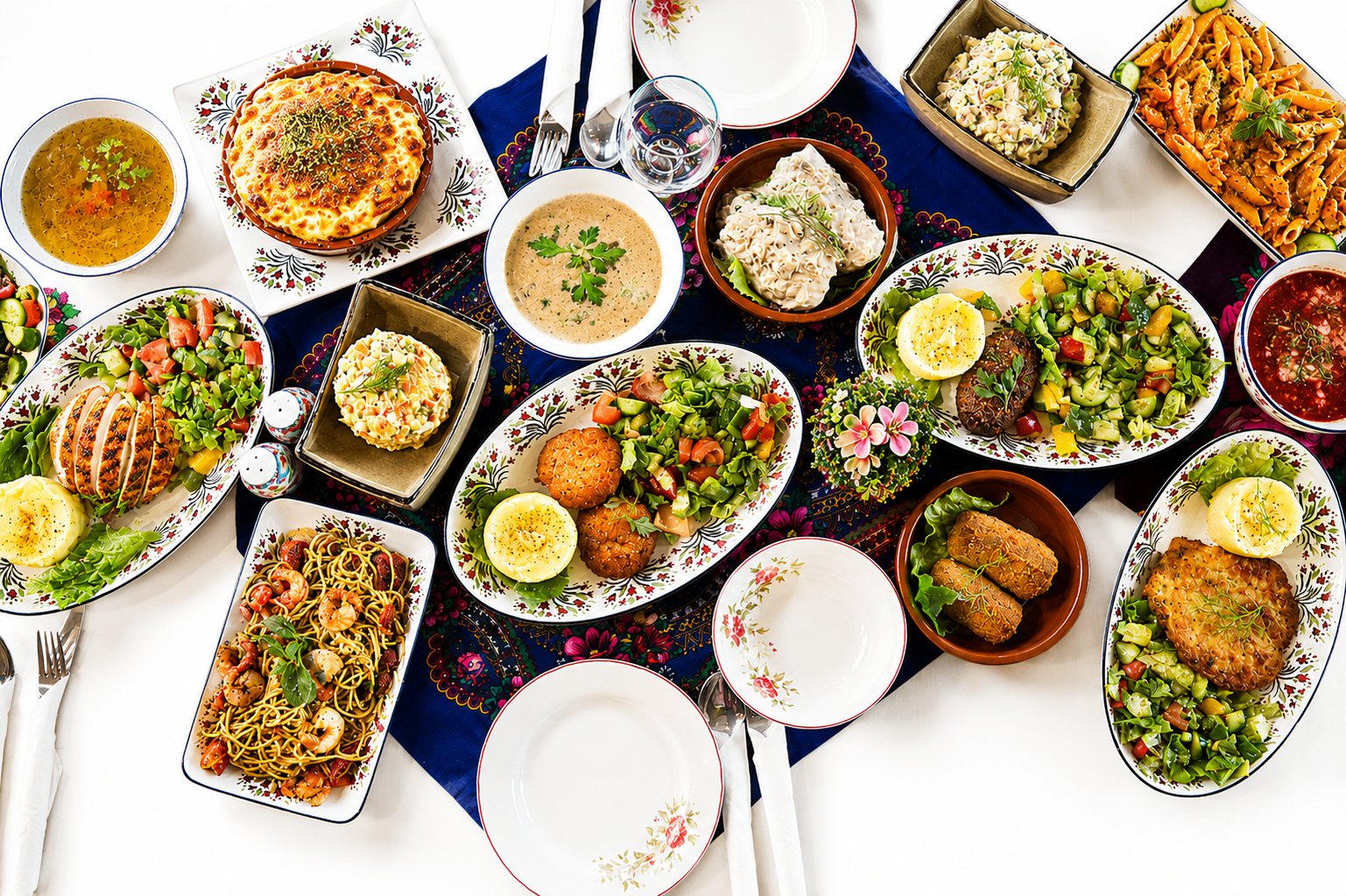
Every plate is folded by hand in our kitchen each morning, boiled to order and finished with caramelised onion or homemade sour cream. These are the fillings currently on the menu:
- Potato and cottage cheese — QAR 40 — the classic pierogi ruskie, served with homemade sour cream.
- Meat — QAR 45 — seasoned minced meat, simply spiced.
- Spinach and feta — QAR 45 — served with sour cream and caramelised onion.
- Lentil — QAR 45 — lentils with a warm spice mix.
- Vegan — QAR 45 — potato, tofu and onion in an egg-free dough, with caramelised onion and soy sauce.
- Mixed plate — QAR 79 — four flavours in one: beef, cheese and potato, spinach and feta, and sauerkraut with mushrooms.
On Mondays between 6:00 and 10:00 PM we serve unlimited dumplings with homemade kompot for QAR 59, dine-in only.
Where to eat pierogi in Doha
You'll find us at 31 Ibn Mahmoud St, Doha Marriott Executive Apartments, Le Mirage City Walk — open Monday and Tuesday 11:00–23:00 and Wednesday to Sunday 10:00–23:00. We also deliver across Doha through Snoonu, Talabat and Rafeeq.
Pierogi are only one part of the table — read our guide to Eastern European food in Doha or find out what a zapiekanka is.